You might be wondering when or if your toddler (1.5 years to 3.5 years old) has a strong attention span. It may not always seem obvious, but they do! Exactly how long it is depends on a wide range of factors, but generally speaking, a two-and-a-half-year-old child can focus on a specific toy or activity for around four minutes.
However, by age five, children are expected to have an attention span of at least 15 minutes to succeed when they start school. This does not include families like ours who homeschool, as we aren’t training our children to be robots in a building for 8 hours.
Focus is a skill that needs to be taught and practised. Here’s how to help build your two-year-old’s focus:
Reframe what focus looks like
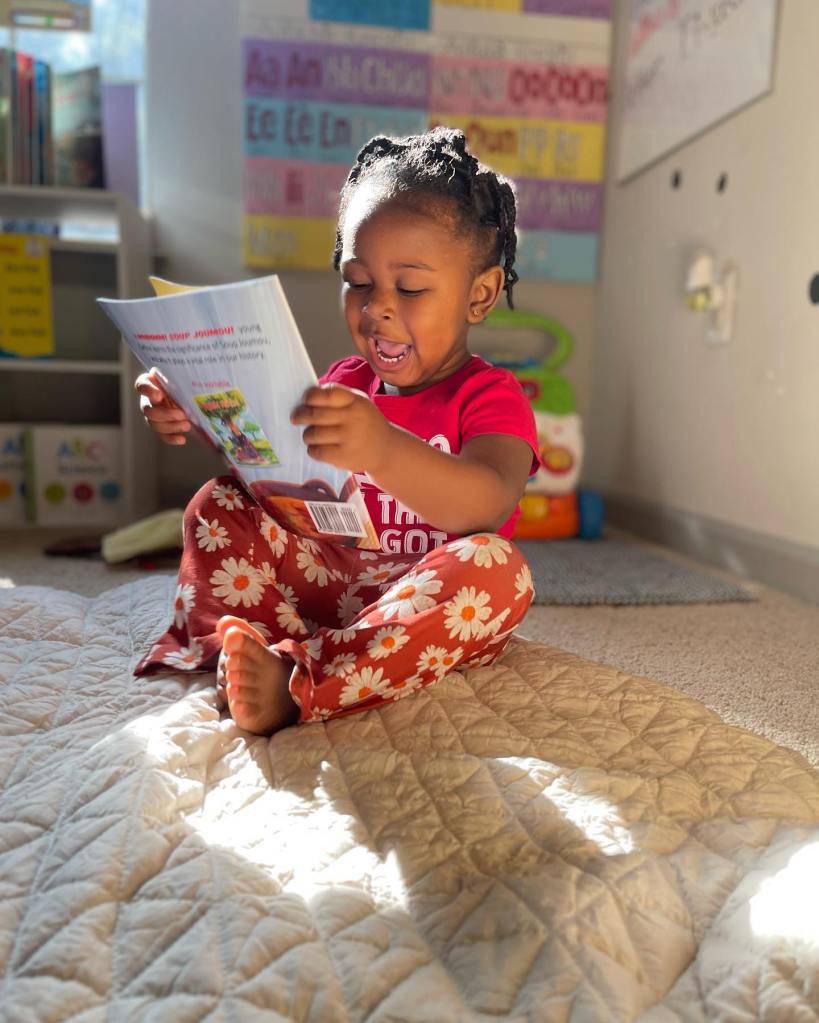
Focus may look different as your child develops and fluctuates daily. Sometimes, for example, your child might be able to listen to a story calmly while sitting on your lap. Other times, they may bounce around, play, and fiddle with their toys. The good news is that they are receiving the same level of language exposure either way; they benefit just as much from squirming and listening as they do from sitting still and listening.
Do look for cues during moments of restlessness (like whining, tantrums, or clinginess) that can tell you when your child needs your support or a break. A child who moves between different activities during play could communicate that they are overstimulated, bored, or looking for a connection with you.
Not too easy, not too hard
Offering toys that meet your two-year-old’s current developmental needs and interests can develop your child’s ability to focus.
Looking at my social media, you’ll find many toddler activities: this is a good example of an activity that offers just the right amount of challenge.
Activities that help, however, are pretend play activities, playing in a sink, colour matching, putting laundry in the hamper, etc.
There’s a sweet spot for “focus coaching.”
A study by the National Institutes of Health found that young children developed a greater capacity for focus when they had gentle and limited support from their adult caregivers. Think about it as “focus coaching”—the focus has to be taught and practised. As a family who practices Montessori, Waldorf and forest schooling, we prioritise guiding our children. We wait and watch their movements and choices and see how we can either aid or watch them.
Since children are simple and around this age, they seek independence from their caretakers. However, tasks requiring too much adult control were counterproductive to the child’s ability to focus. Finding the right balance can be tricky and may require some trial and error to determine how much support your child truly needs.
When you are playing with your two-year-old and notice them struggling with something, wait before stepping in to see if they can find a solution on their own first. For example, if they’re disengaging from a challenging activity, you can point and say, “I see a yellow, round piece that I bet would fit where the sun is.” If they still seem lost, put the piece next to its slot on the puzzle board and let your child slide it into place. Then say, “can you try doing the next piece?”
Consider our minimalist approach.
In the Montessori philosophy, less is more. Two-year-olds are in a developmental stage Montessori experts refer to as the “sensitive period for order.” Having too many toys to choose from can overwhelm your two-year-old and make it harder for them to focus.
Consider incorporating a toy rotation into your routine. Limiting the number of toys your child has access to allows you to tailor what is available to meet their current interests and abilities, allowing them to deepen their focus without environmental distractions. You also have a better idea of what may be understimulating them. Many times, the toys children have are doing the work for the kids, leaving the child underwhelmed and thus not focused.
 Blissful Births & Connections
Leave a comment